Diamond Forums Twitter Feed

Recent twitter entries...

Showing posts with label Diamond Shapes. Show all posts

Trilliant / Trillion / Trielle Cut Diamonds

1
Trilliant / Trillion / Trielle Cut Diamonds And so we reach Trilliant (or Triangular Brilliant) Cut Diamonds. Providing that Trillian Cut stones are Cut correctly (particularly in relation to their depth), they exhibit fantastically sharp fire and brilliance - truly stunning.

Here in the US the ideal pavilion depth is considered to fall in between 1/3 & 2/3, although some of the foreign Trilliants often display 50/50 proportions. To secure the ideally shaped Trilliant, try to find one that has a length-to-width ratio of 1:1.

Round / Round Brilliant Cut Diamonds

0
Round / Round Brilliant Cut Diamonds And so we arrive at the most popular Diamond shape / Cut today, the Round Brilliant. Always a popular shape, and for good reason: The Round Brilliant Cut follows more closely the shape of the natural Diamond crystal and as such it is possible for skilled craftsman to produce an "Ideal" Cut, completely maximizing the fire and brilliance of any given stone and releasing the scintillation from within.

The Round Brilliant Cut is the only Cut whereby if done expertly and perfectly, the "Ideal" standard can be reached. The number of considerations that have to be taken into account to accurately determine Diamond Cut grades is mind boggling, but should anyone want specific information, feel free to contact us.

One interesting point to note is that GIA (Gemological institute of America) will, in January 2006 introduce Cut reports to complement their already well-respected Diamond Grading Reports, which is something we will cover in later posts.

Visit Whitefacet.com to search for certified loose diamonds.


Radiant Cut Diamonds

0
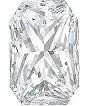
Radiant Cut DiamondThe great thing about Radiant Cut Diamonds is the fact that they look equally great paired with either Round shaped sidestones or Baguette shaped sidestones.

As with most fancy-shaped Diamonds do be conscious of the fact that if you select a Color of I or less, you may well have to suffer some visible Color in the corners of the stone.

If you desire a rectangular shaped Radiant Cut Diamond seek out a length-to-width ratio greater than 1.11:1, but generally not more than 1.5:1.  For a square radiant Cut Diamond the optimum length-to-width ratio of 1:1 should come as no surprise.

Princess Cut Diamonds

0
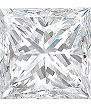
Princess Cut DiamondPrincess Cut Diamonds are traditionally square in shape, but some people actively seek out rectangular Princess Cuts as by its very nature a Princess Cut Diamond varies a great deal with regards to how square or rectangular any particular stone is.

If you want a particularly square stone, you'll need to find one with a length-to-width ration of between 1 & 1.10, whereas if you are seeking a  rectangular shape you'll need to find a stone with a length-to-width ratio of greater than 1:11, although it is perfectly acceptable to go out as far as 1-1.4:1 so let the stone you choose be a personal choice rather than what people try to dictate to you as being the only sort of acceptable stone.

Pear Cut Diamonds

0
Pear Cut DiamondPear Cut Diamonds essentially look like teardrops - they have a rounded edge and one single point. The Pear Cut is not too different from the standard Round Brilliant Cut and as such is one of the fancy Diamond shapes that is relatively popular - this is because whilst it is a "fancy" Cut it is not too unusual and does not stray to far from what is perceived as the "norm."

Not unlike the
Marquise Cut , the Pear Cut has a slimming effect on the wearer's finger.

Length to Width ratio seen as ideal is 1.5:1, whereas realistically providing you stick to a ratio of between 1.5-1.7:1, you will still secure a Diamond that is aesthetically pleasing and a real joy to look at.

Oval Cut Diamonds

0

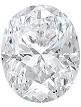
Oval Cut Diamonds are not dissimilar to Round Brilliant Cut Diamonds and the brilliance they often display is very nearly equal to that of a Round Brilliant Cut. The other major positive with an Oval Cut stone is that the shape can be used to effectively accentuate longer, slender fingers.

As with all Diamonds one factor of major importance is what you, the customer wants or expects from their Diamond. What is right for one (or even the masses) may not be right for you as an individual.

Any Diamond Broker / Dealer / Retailer / eTailer worthy of your attention should offer you a reasonable time-scale with which you have the Diamond to decide whether you like it & to have it checked out independently by someone else as well if you so wish. (The usually accepted time period tends to fall anywhere between 15 and 30 days, giving you plenty of time to decide whether or not you have found the right Diamond for you).

Having said all of the above, here comes the usual length to width ratios:

Acceptable is anywhere from 1.5-1.75:1, whereas the most desirable is said to be 1.5:1.


Marquise Cut Diamonds

0

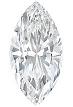
The shape of Marquise Cut Diamonds is a shape that is designed to maximize the Carat weight of a given stone. If not set with other Marquise Cut Diamonds, then Round Brilliant or Pear are the shapes / cuts that complement the Marquise the most effectively. The Marquise is an excellent choice for people wanting to make their fingers appear longer and more slender.

Acceptable length to width ratios are generally from 1.75-2.25:1, whereas those of you seeking the closest to perfect you can get should consider the length to width ratio of 2:1, universally considered to be the most aesthetically pleasing.

Heart Cut Diamonds

0
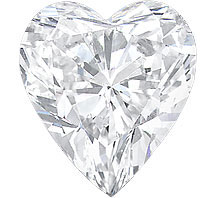
The main advantage of a Heart Shaped Diamond is that it has a pavilion that is nearly round. This results in real beautiful brilliance. When choosing a Heart Shaped diamond do bear in mind and pay special attention to the Color you select - any grade above an I Color may well equal visible Color in the corners of your otherwise beautiful stone.

Don't be too quick to let this put you off though - remember certain inclusions, or even patches of visible Color may well be hidden by your setting if you choose this wisely. If in doubt - Ask!

Emerald Cut Diamonds

0
The main factor differentiating an Emerald Cut Diamond from other Cut styles is the pavilion which is generally cut with rectangular facets, designed to create a unique brilliance.

The down-side with the Emerald Cut is the fact that this particular shape serves to exaggerate the Clarity of a Diamond and does so even so much as to determine that if you were to choose an Emerald Cut Diamond with an SI1 Clarity (normally an eye-clean Clarity) you would need to take care and pay particular attention to the Diamond Certificate's plot and where what inclusions were contained.

With this shape you should really take professional advice before purchasing and adopt a look before you leap mentality so as to ensure that you get the right stone for you.

With regards to length to width ratios, acceptable ratios are widely considered to be 1.55-1.75:1, with a beautiful and very desirable shape likely to have a length to width ratio of somewhere between 1.30-1.40.


Cushion Cut Diamonds

0
Believe it or not, one of the main the reasons that Cushion Cut Diamonds have larger than average facets and rounded corners is to maximize their brilliance under candlelight!

Whilst I am the first to ask why, the answer is actually very simple......Cushion Cut Diamonds enjoyed excellent popularity around 100 years ago, before the event of electricity.

One very important factor to consider if you choose to buy a Cushion Cut Diamond is
Clarity as the larger than average facets tend to accentuate any inclusions that are present.

It is generally accepted that good-looking length to width ratios fall between 1:1 & 1:2.

Baguette Cut Diamonds

0

Yes it's true. This may be unbelieveable to some but there are Diamond shapes named after those famous French breadsticks, or "Baguettes"!

There are two main types of Baguette Cut / Shaped Diamonds - The regular Baguette Cut (sometimes referred to as the Pronounced Baguette), and the Tapered Baguette.

It is very unusual to come across large sized Baguettes; This shape is usually used to accompany and complement other larger Diamonds and Baguettes predominantly play the role of the smaller stones in any given setting.

Baguettes, be it "Pronounced", or "Tapered" have acceptable length to width ratios of 1.5-2.5:1, with the optimum proportions generally considered to be 1.5:1.


Asscher Cut Diamonds

0


Asscher shaped Diamonds are not unlike Emerald Cut Diamonds, with the main difference being the fact that Asscher shaped Diamonds are square.

There are two very important considerations to be made when selecting an Asscher shaped Diamond - Color and Clarity.

When selecting the Color for your Asscher shaped Diamond, consider carefully the fact that Color may be slightly visible in the corners if you were to choose an I Color or less.

Also remember that the shape of an Asscher Diamond highlights the Clarity of the stone so be sure to find out exactly where any inclusions are present.

Lastly you need to pay attention to the dimensions of the stone:

The preferred length-to-width ratio is 1:1. However, the acceptable length-to-width ratios fall between 1-1.4:1.


Diamond Shapes

0
Now we've covered the basics of Color, Carat, Clarity and Cut, I guess that now it's time to explore the different Diamond shapes in detail. Over the next few weeks / months I'm gonna try to explain and advise all of you on what characteristics to look out for when considering the different Diamond shapes:

Asscher
Cushion (Pillow Cut)
Emerald
Heart-Shaped
Marquise
Oval
Pear
Princess
Radiant
Round Brilliant
Trilliant (Triangular Brilliant)
Rectangle (Baguette Cut)
Tapered Baguette

In order to make my explanations easier to understand from a lay-persons point of view my next posting will comprise solely of regularly used Diamond Industry terminology and explanations of what they all mean - call it a dictionary / glossary, whatever you prefer, but I really hope it helps.